i want a label so long they don’t know how to write it
Ongoing
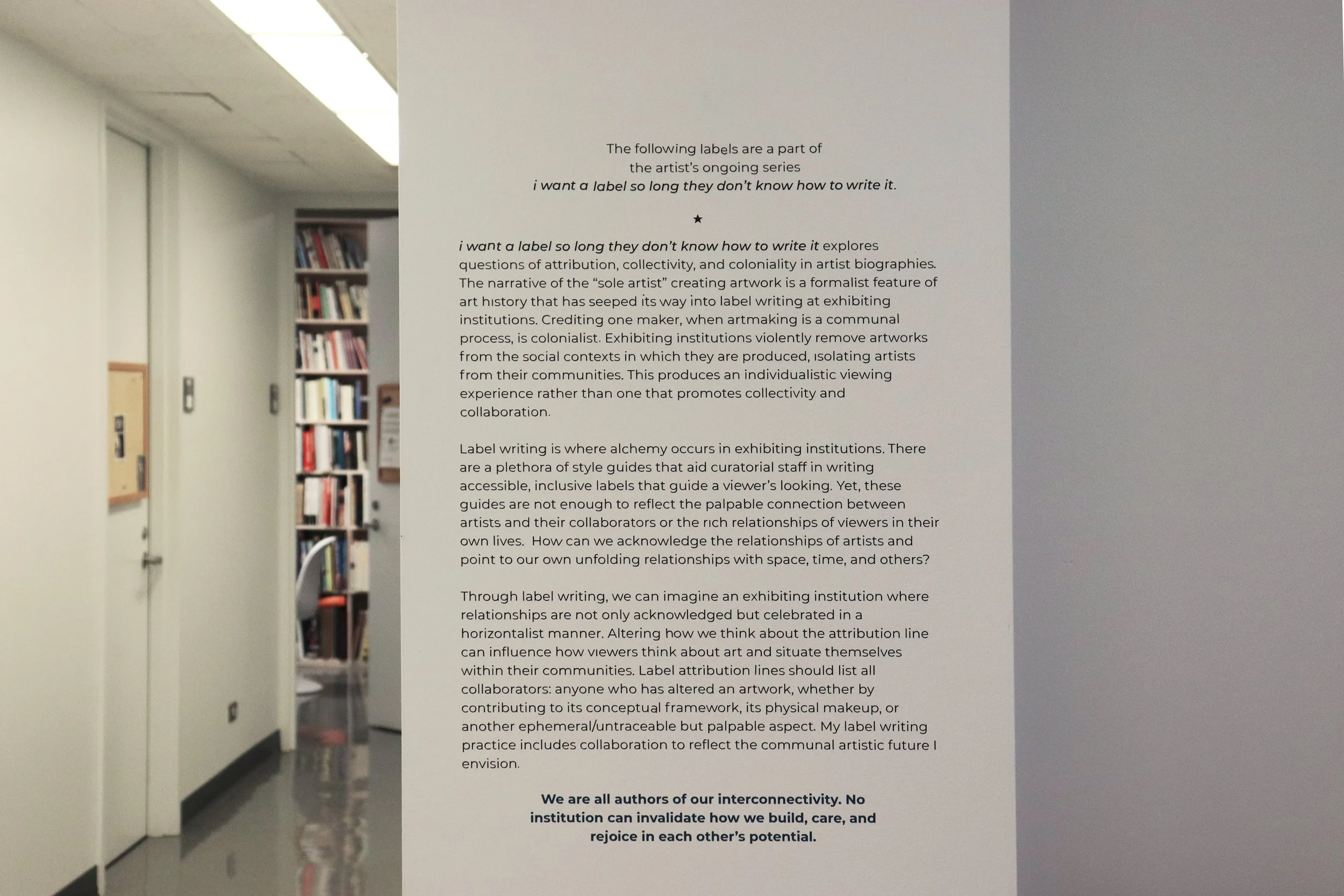
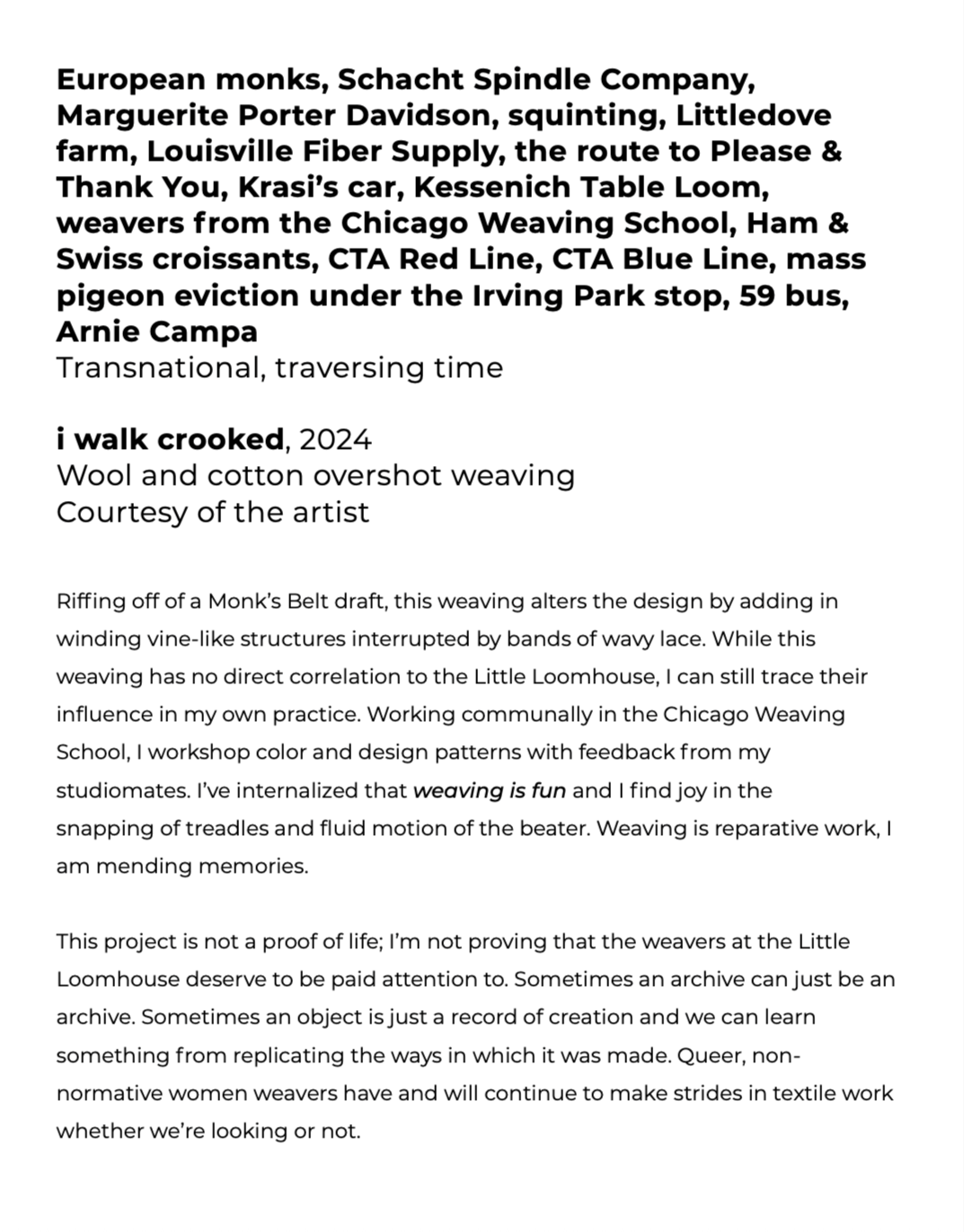
i want a label so long they don’t know how to write it explores questions of attribution, collectivity, and coloniality in artist biographies. The narrative of the “sole artist” creating artwork is a formalist feature of art history that has seeped its way into label writing at exhibiting institutions. Crediting one maker, when artmaking is a communal process, is colonialist. Exhibiting institutions violently remove artworks from the social contexts in which they are produced, isolating artists from their communities. This produces an individualistic viewing experience rather than one that promotes collectivity and collaboration.
Label writing is where alchemy occurs in exhibiting institutions. There are a plethora of style guides that aid curatorial staff in writing accessible, inclusive labels that guide a viewer’s looking. Yet, these guides are not enough to reflect the palpable connection between artists and their collaborators or the rich relationships of viewers in their own lives. How can we acknowledge the relationships of artists and point to our own unfolding relationships with space, time, and others?
Through label writing, we can imagine an exhibiting institution where relationships are not only acknowledged but celebrated in a horizontalist manner. Altering how we think about the attribution line can influence how viewers think about art and situate themselves within their communities. Label attribution lines should list all collaborators: anyone who has altered an artwork, whether by contributing to its conceptual framework, its physical makeup, or another ephemeral/untraceable but palpable aspect. My label writing practice includes collaboration to reflect the communal artistic future I envision.
WE ARE ALL AUTHORS OF OUR INTERCONNECTIVITY. NO INSTITUTION CAN INVALIDATE HOW WE BUILD, CARE, AND REJOICE IN EACH OTHER’S POTENTIAL.